Car Overheating: Stop Conditions and Next Steps
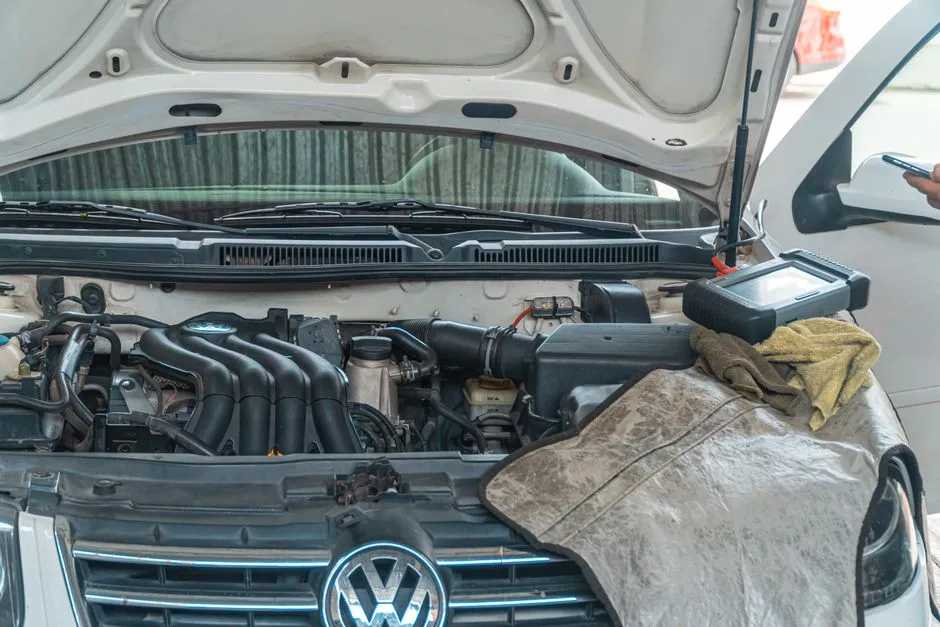
Treat an overheating warning as a stop decision
If the temperature warning, gauge behavior, steam, coolant smell, reduced-power message, or abnormal engine noise indicates overheating, reduce exposure and pull over at the first safe legal place. Follow the vehicle manual for shutting down, occupant safety, roadside warnings, and towing. Do not continue merely because the destination is close; heat does not negotiate by mileage.
Stop immediately for steam, coolant discharge, sudden power loss, oil-pressure warning, heavy knocking, smoke, fire, or a warning that explicitly says to stop. Call emergency services for fire or immediate danger.
Keep away from heat and pressure
Do not open a radiator, expansion tank, or pressurized cooling-system cap while hot. Escaping coolant and steam can cause severe burns. Keep hands, clothing, tools, and water away from fans, belts, hot exhaust, electrical equipment, and high-voltage components; electric fans may start without warning.
Do not pour cold fluid onto a hot engine. Stay out of traffic and do not crawl beneath a leaking vehicle.
Record what happened
Note ambient conditions, vehicle load, speed, hill or traffic, heater and air-conditioning use, warning sequence, gauge movement, steam location, smell, recent cooling work, prior fluid loss, and whether cabin heat changed. Save all module codes and freeze-frame information without clearing.
A symptom during slow traffic may lead diagnosis toward airflow or control; one under sustained load may suggest a different test path. Neither pattern proves a fan, thermostat, pump, radiator, or sensor has failed.
Inspect only after the vehicle is fully safe and cool
From outside danger areas, look for a damaged hose, wet trail, reservoir condition visible without opening, debris at cooling inlets, broken belt where applicable, or an obvious external leak. Follow the manual before checking or adding any fluid. Cooling systems require the correct specification and bleeding process; mixing or overfilling can create new problems.
Use leak location and context to document evidence, not to taste, touch, or identify unknown fluid by color alone.
Do not assume cooling is a repair
An engine that restarts after cooling may still have low coolant, trapped air, a leak, combustion-gas intrusion, pump, fan, thermostat, belt, radiator, cap, sensor, wiring, control, or internal damage. Continuing can cause another rapid overheat.
Arrange qualified towing when fluid was lost, steam occurred, the cause is unknown, warnings remain, the engine ran abnormally, or the manual does not explicitly permit further travel.
Diagnose the complete heat path
A technician should verify coolant condition and level through approved procedures, pressure integrity, circulation, airflow, temperature sensing, fan command and operation, thermostat behavior, belt drive, combustion sealing, oil condition, exhaust restriction where relevant, and calibration or control logic. Hybrid and electric thermal systems may cool batteries, motors, electronics, and cabin circuits with specialized equipment.
Verify under controlled conditions
After repair, purge or vacuum-fill only as the service procedure requires, check for leaks, confirm sensor agreement, fan or pump commands, cabin heat, stable temperature, and no code return. Use post-repair verification and recheck once cold.
The professional-repair boundary arrives early with overheating. A new cap and a hopeful expression are not a cooling-system test.