Wheel-Bearing Noise vs Tire Noise
Begin with the pattern, not the preferred diagnosis
Record whether the hum, drone, growl, or roar changes with road speed, surface, temperature, braking, acceleration, or gentle curves. Note tire pressure, recent rotation or impact, tread wear, wheel service, and whether vibration appears in the steering wheel, seat, or floor.
Stop for a loose wheel, severe wobble, grinding, heat, smoke, rapid pressure loss, tire bulge, steering change, brake warning, or unstable control. A noise investigation is never worth a wheel departing the agenda.
Tire noise follows tread and surface clues
Uneven wear, cupping, feathering, aggressive tread, hardened rubber, damage, incorrect pressure, flat spots, or different tread designs can create a speed-related roar. Noise that changes dramatically between road surfaces often points toward tire interaction, but this is not proof.
Inspect tread and sidewalls on stable ground. Compare wear across and around each tire, confirm the vehicle-specified cold pressure, and look for bulges, exposed structure, cuts, embedded objects, and wheel damage. Do not drive on a suspect tire.
Bearing noise follows rotating load—but imperfectly
A damaged wheel bearing may hum, growl, grind, or develop play or heat. Its sound can change as cornering loads shift, yet body structure transmits noise and can make the opposite corner seem guilty. Some sealed bearings become noisy before measurable play; other suspension or brake faults can mimic them.
Do not weave in traffic or make abrupt turns to load-test a bearing. A controlled road evaluation belongs in safe conditions, and final diagnosis requires inspection and measurement.
Rotation can provide evidence
When tires are safe and rotation is permitted by their directional, staggered, size, TPMS, and vehicle requirements, a qualified rotation may show whether the noise moves or changes with a tire. Record locations first and torque wheels through the exact procedure.
Do not rotate a damaged tire merely to conduct an experiment. A change after rotation supports a tire-related path; no change does not automatically convict a bearing.
Inspect the whole wheel-end system
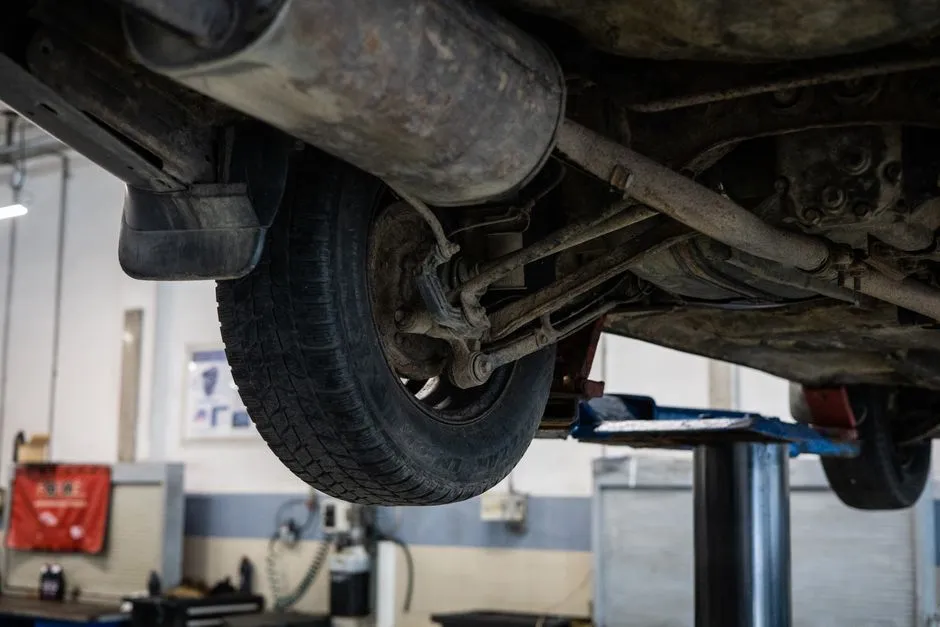
With exact lift points, stable rated supports, and proper procedures, inspect wheel security, hub and bearing condition, brakes, shields, axle or joint, steering and suspension joints, tire contact, and mounting surfaces. Never work beneath a jack-only vehicle or spin driven wheels in an unsafe raised condition.
Brake drag or shield contact may add heat and noise. Review brake noise diagnosis when the sound changes during braking.
Use instruments when hearing is ambiguous
Qualified technicians may compare wheel speed, vibration, chassis-listening sensors, runout, temperature under controlled conditions, or bearing load and play specifications. Temperature alone can mislead because brakes, sun, and driving pattern affect heat.
Steering-vibration patterns can narrow rotating, braking, and driveline branches without pretending one symptom is exclusive.
Verify after repair
Correct the proven tire, wheel, bearing, brake, or suspension cause. Follow axle fastener, bearing preload where applicable, wheel torque, alignment, and calibration procedures exactly. Test first at low speed, then repeat the original safe condition.
Use the post-shop verification if work was outsourced. A quieter radio station is not a diagnostic instrument, though it may reveal just how much the old tires had been singing.