Steering-Wheel Vibration: Sort the Clues
Vibration needs a speed, load, and event map
Record whether the steering wheel shakes at a particular road speed, during braking, while accelerating, through a turn, after a bump, or at idle. Note whether it changes with road surface, tire temperature, rain, cargo, recent wheel or suspension work, and whether the seat or floor vibrates too.
Stop and tow for a bulged or rapidly deflating tire, loose wheel, severe pull, steering loss, grinding, smoke, impact damage, brake warnings, or vibration that compromises control. Slow smoothly without abrupt steering or braking.
Speed-related shake often begins at the rotating assembly
Tire pressure loss, damage, separation, uneven wear, flat spotting, mud or ice inside a wheel, wheel deformation, balance change, mounting error, or hub contamination can produce speed-related vibration. Driveline and bearing faults can feel similar.
Inspect tires and wheels from outside on stable ground. Do not drive on a bulge, exposed structure, cracked wheel, missing fastener, or unexplained pressure loss. Use the vehicle label or manual for cold road pressure, not the sidewall maximum.
Braking vibration changes the suspect list
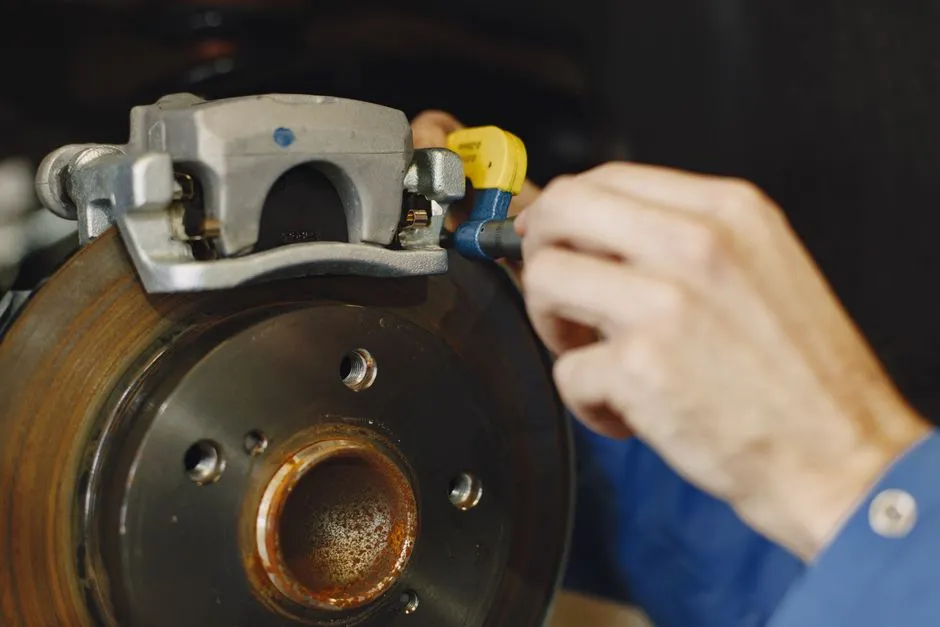
If the shake appears mainly with brake application, inspect rotor or drum variation, friction transfer, caliper operation, hub mounting, wheel fastener procedure, bearing condition, and suspension looseness. A pulsing pedal and steering movement provide different clues, but neither proves “warped rotors.”
Read the brake-noise diagnostic guide and treat heat, pulling, fluid loss, smoke, or reduced braking as stop conditions.
Acceleration and engine speed add other branches
Vibration under acceleration may involve inner joints, driveshafts, mounts, wheels, tires, or powertrain operation. A vibration present while stationary follows engine speed, accessory, exhaust, mount, or combustion paths rather than wheel rotation.
Never reproduce severe vibration at high speed. A qualified technician can use controlled lift, chassis-ear, runout, balance, scan, and road-force methods where appropriate.
Turning changes load, not just direction
A hum or vibration that changes in a curve may reflect tire tread loading, bearing load, driveline angle, or contact. It does not identify which side without further testing. Wheel-bearing versus tire-noise clues should guide inspection, not a dramatic lane weave.
Do not perform steering maneuvers in traffic to “load the bearing.” Use safe controlled evaluation and exact lift and play-check procedures.
Inspect the complete attachment path
Check tire and wheel condition, correct fitment, mounting surfaces, fasteners and torque history, hubs, bearings, brakes, steering links, ball joints, bushings, struts or shocks, springs, driveline, mounts, and underbody contact. Alignment can affect wear and pull, but alignment equipment cannot make a damaged joint safe.
Never crawl under or pull forcefully on components with a vehicle supported only by a jack.
Verify after the correction
Repair the documented cause, torque fasteners through the exact sequence, set pressure, and verify at low speed before a controlled road test. Compare the same road, speed region, temperature, load, and braking condition where safe.
Use the shop-verification checklist and stop if any vibration, warning, or control change remains. Steering vibration is the vehicle sending a message. It would be friendlier if it used email, but the subject line is still “inspect me.”